Skip to main content
An organization was looking to understand and address two things about the non-users of its evidence on quality professional learning (those in their target audience who were not engaging with their resources):
- What are the barriers preventing school districts from finding their resources?
- What are the barriers preventing school districts from trusting their resources enough to interacting with them?
In our commitment to bolster this organization and enact tangible change, we crafted a bespoke methodology employing essential tools from our toolkit. Here, we present a brief synopsis before delving into the finer nuances.
Summary

Barriers to audience awareness and trust
Many in the target audience do not know about the organization and/or it’s resources and the organization is concerned that its brand is not trusted as a go-to resource by school districts.

Understand and cater to audience experience
We defined what the barriers to awareness and trust are then tested and validated key solutions to enhance the marketing strategy to address the identified barriers

Effective email design and content
We experimentally demonstrated ways to optimizing email bodies, subject lines, and visual graphics then created resources and trainings for the organization to apply these recommendations.
Approach
We initiated diagnostic interviews with the organization’s staff to gain a comprehensive understanding of their needs. Additionally, we conducted exploratory interviews with school district leaders who are responsible for purchasing professional learning (PL) services (buyers).
These interviews involved usability tests of the organization’s website and aimed to qualitatively evaluate perceptions of the organization, focusing on key trust factors.
Using insights from these diagnostics, we developed a survey to delve deeper into trust levels. Subsequently, we utilized these survey findings to design and implement three experiments, specifically focusing on identifying the most impactful imagery and language for online content and email campaigns.
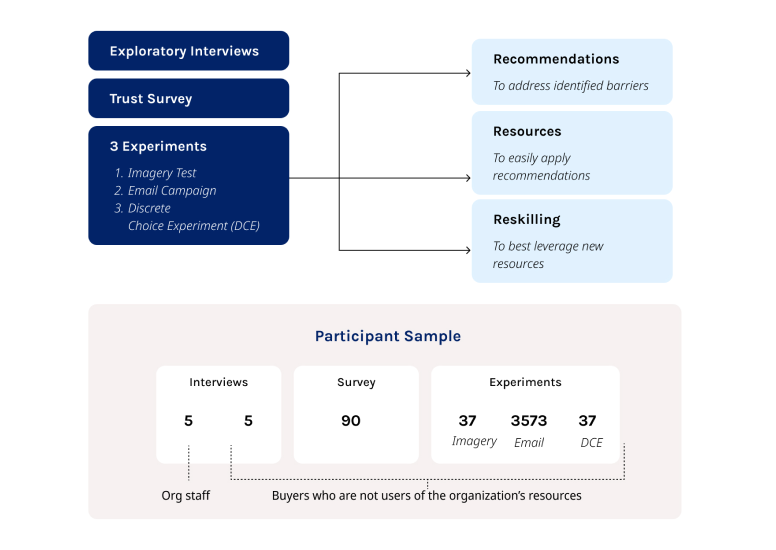
Tools used
We applied a series of tools to deliver support to this organization. Below are the key tools and how we utilized them. Keep in mind that using a specific tool does not mean that every part of the tool was leveraged. The toolkit is designed in a manner that allows you to focus on the most pertinent sections for your organization.
Impact
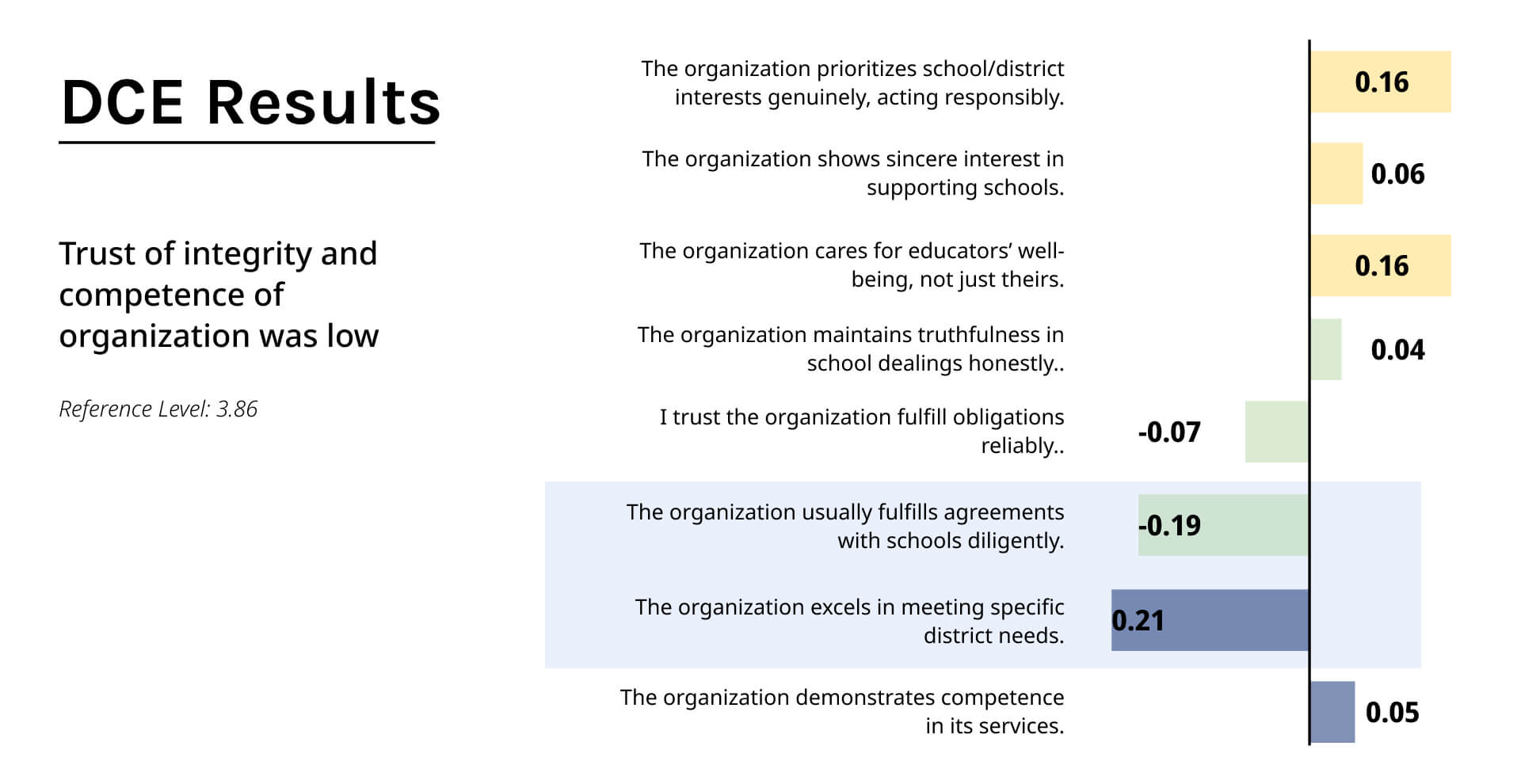
Based on our diagnostic findings, we identified a lack of awareness among buyers regarding the organization’s professional learning offerings. Although some resources garnered high trust levels compared to the broader PL ecosystem, buyers expressed the lowest level of trust in the organization’s ability to fulfill agreements with schools diligently and cater to specific school needs as a PL vendor.
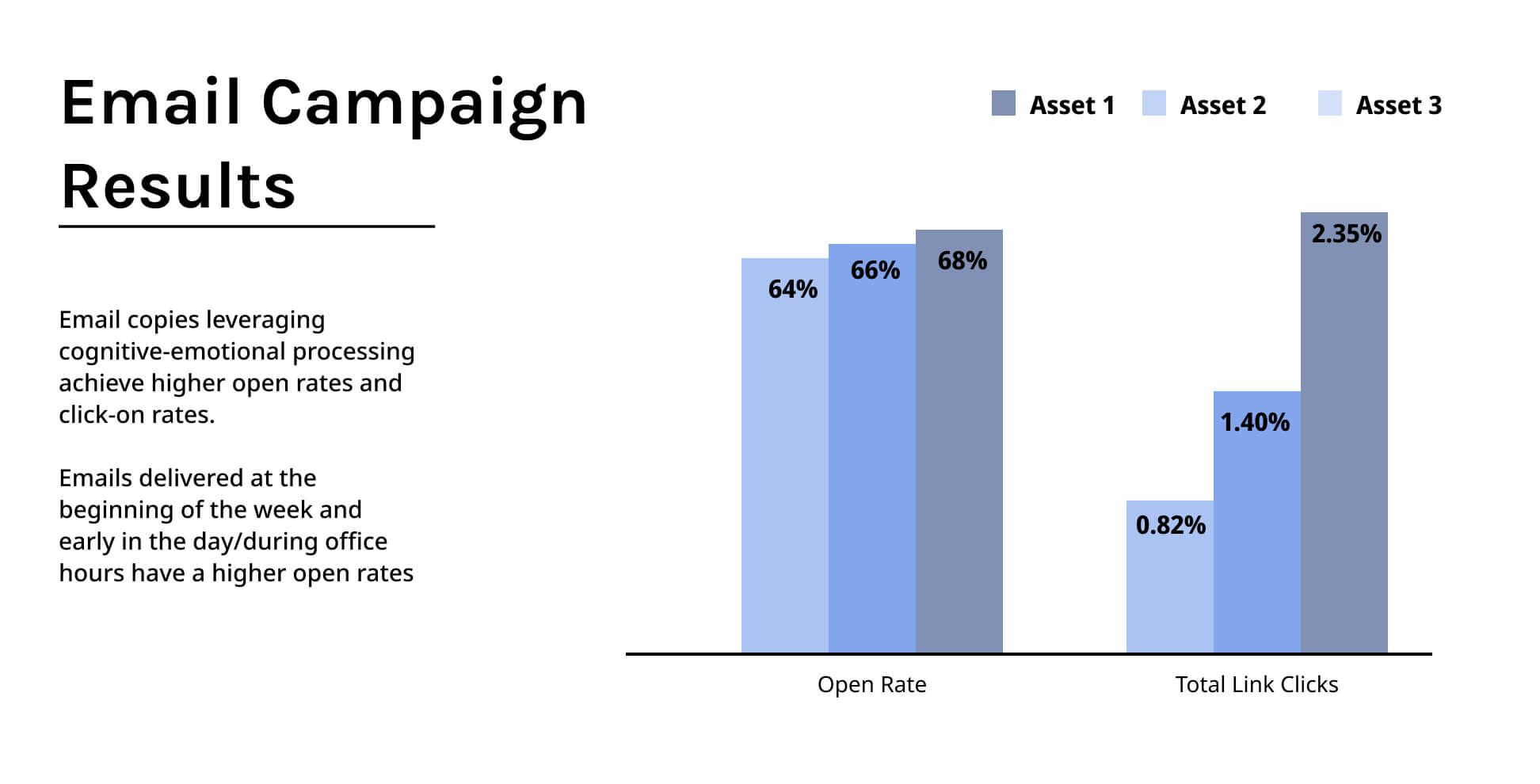
To address this, we conducted behavioral experiments to assess buyers’ trust in various messaging and communication strategies. In so doing, we demonstrated that optimizing email bodies (design and language) can yield up to 2x more link clicks, and that adjusting subject lines can raise open rates by up to 6%. Guided by these insights, we collaborated with the organization to design an optimized email campaign to attract new users.
The outcome was a more impactful email campaign characterized by enhanced design and targeted outreach efforts.
Recommendations
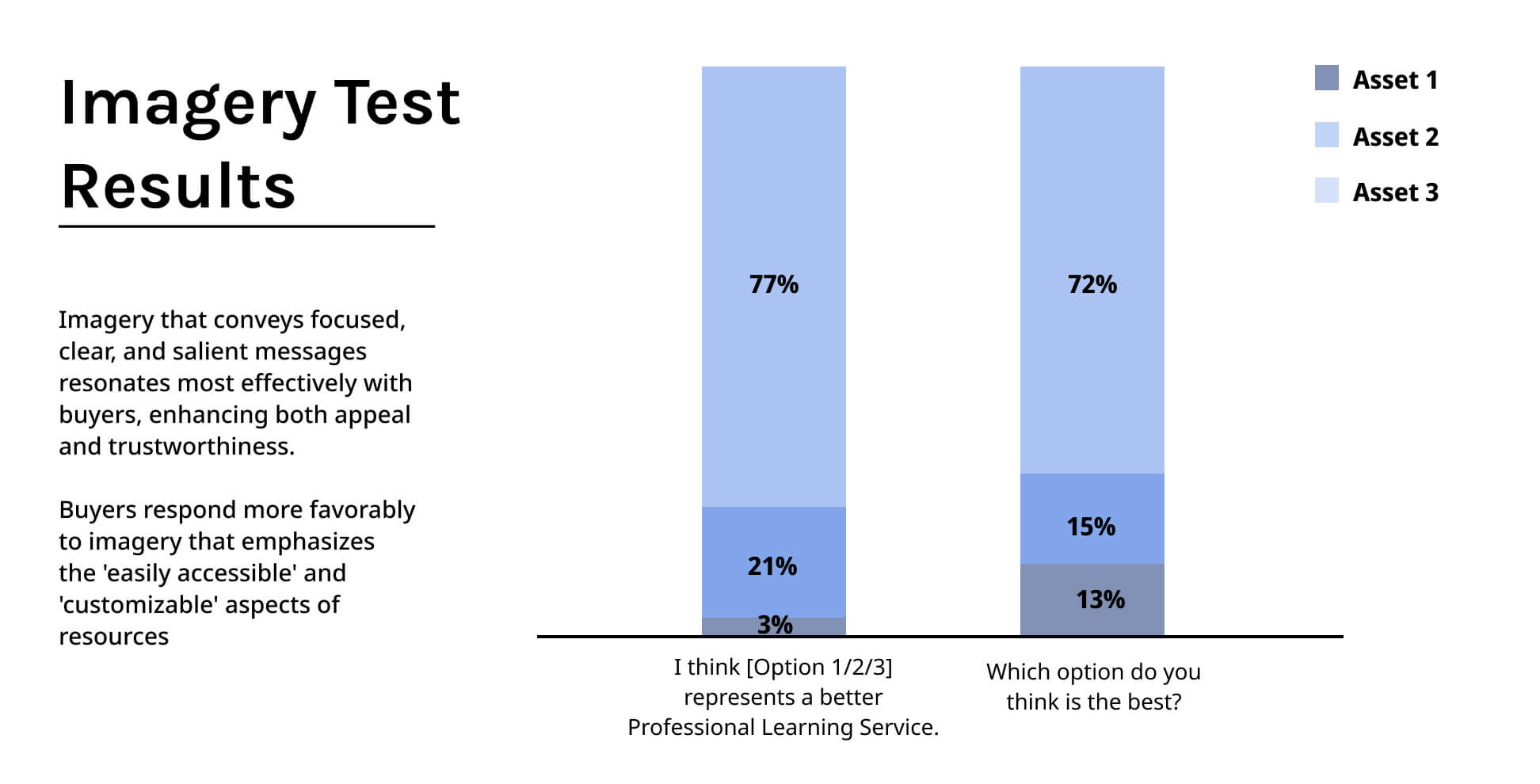
We determined that an emotionally engaging subject line and a focused, clear, and salient message emphasizing ‘easily accessible’ and ‘customizable’ imagery are most successful. Results from our discrete choice experiment further indicate that visual graphic elements to stress key messages about impact, research effort, and delivery significantly boost perceptions of competence and integrity.
Resources
We created a database of 100+ new non-users for the organization to reach out to via the new email campaign design.
Reskilling
We ran workshop to help the organization define their target audience and reskill them on how to create a contact database efficiently.
References
Cunningham, Linda C., and Lisa A. Tedesco. “Mission Possible: Developing Effective Educational Partnerships.” Journal of Higher Education Outreach and Engagement, 79–89. 2001.