Skip to main content
Quality seals or quality certifications are used in different ways across the professional learning, core curriculum, and education technology (EdTech) ecosystems. An organization providing EdTech product quality certifications was looking to answer the following questions about all district buyers in general:
- How do district buyers use product quality certifications in their procurement decisions?
- How can the organization enhance the impact (awareness and engagement) of their quality seal/certificate?
To support this organization, we went through a series of tools to both refine the questions further and systematically address them. Below we highlight a summary of these activities, then dive into the details.
Summary

Unclear buyer impact of quality seal
Many in the target audience do not know about the organization and/or it’s resources and the organization is concerned that its brand is not trusted as a go-to resource by school districts.

Understand and enhance engagement
We conducted exploratory surveys then experiments with alternative seal designs to more effectively boost engagement with product certification.

Demonstrably clear and engaging quality seal
We designed a quality seal that increased user engagement and understanding and developed the organization’s capacity for user-informed strategic planning.
Approach
We interviewed key staff in the organization to better understand their needs and their process, including the intended plan of engagement with the organization’s quality seal. For example, what would the organization prefer that district buyers do upon seeing the seal? What are the resources (or additional information about product certifications) tied to the seal?
We assessed the experience of district buyers on the organization’s website through usability tests to better understanding users’ broader barriers utilizing their resources, then conducted an exploratory survey to understand the experience of district buyers on engaging with EdTech quality seals (product certifications) generally.
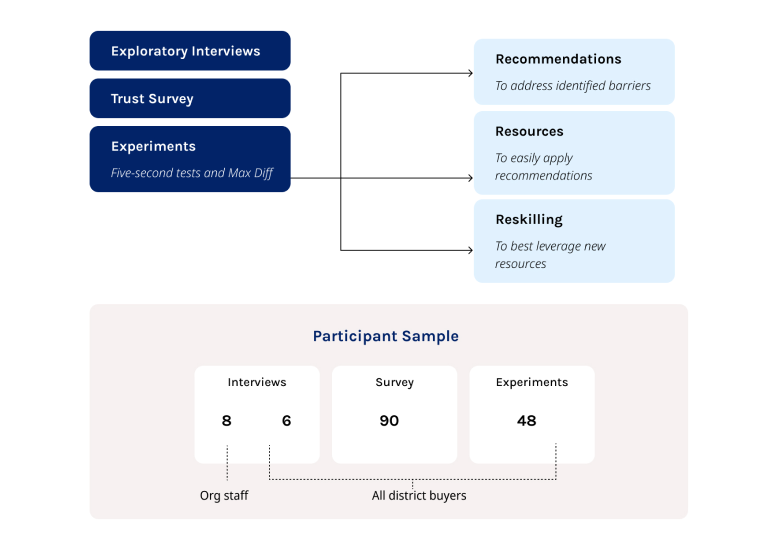
TOOLS USED
Some of the tools we applied to support this organization was to better define their capacity gap, while others were used to address the identified gaps. Below we highlight how the four tools we used were incorporated in this process.
Impact
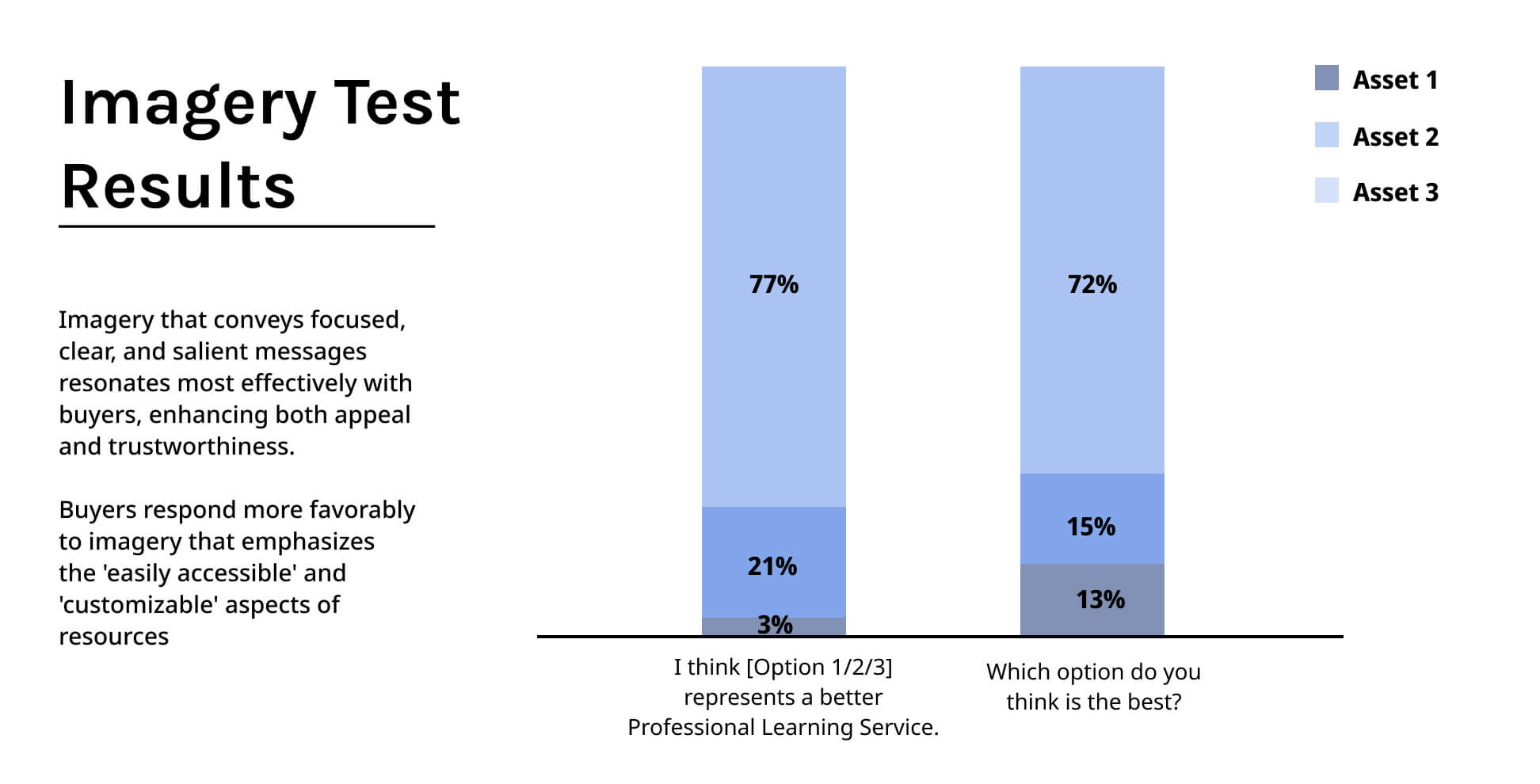
The exploratory interviews and survey revealed that considerable potential for converting neutral district buyers into active users of product certification, with availability and accessibility identified as the primary barriers. We implemented a 5-second test on various alternative badge designs to strengthen engagement with product certification.
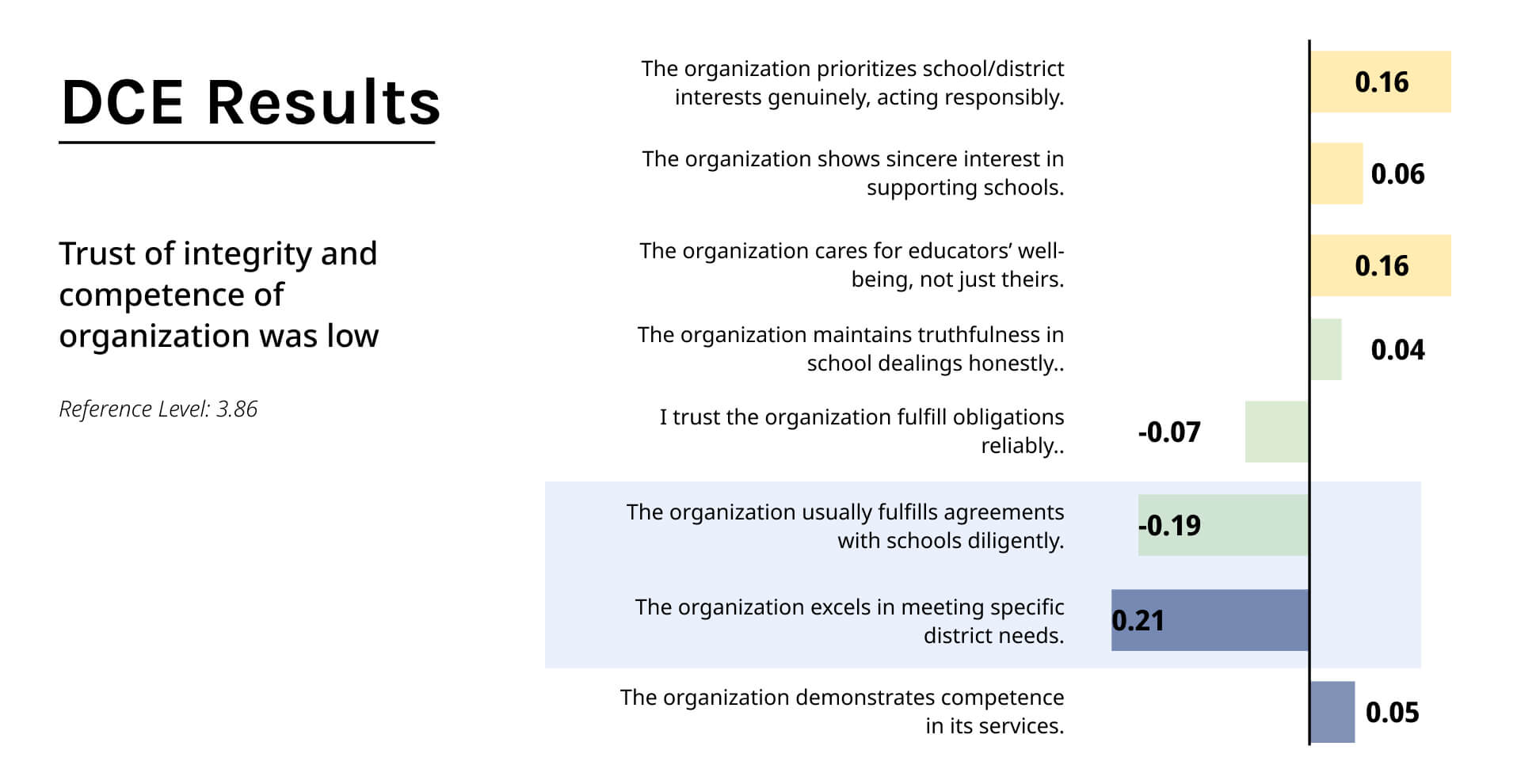
The findings reveal that badges designed by TDL outperform the current design, exhibiting positive attributes like clarity of message (e.g. the organization’s original badge was more often mistaken for an EdTech provider logo), reliability, professionalism of the issuing organization, and trustworthiness of the issuing organization. This was accomplished by making the visuals more intuitive and language on the badge more easy to understand. Furthermore, our MaxDiff experiment identified that in conference settings, the organization should emphasize transparency, guideline-alignment, and relevance to all districts, regardless of their unique needs.
The outcome was a quality seal/certification badge that increased user engagement and understanding and user-informed strategic planning.
Recommendations
We found that testing badge designs with target audiences is crucial for ensuring that users engage with them as intended. Organizations need to clearly define the purpose of the badges, the specific actions they want users to take when interacting with them, and how these actions align with their overall goals.
Resources
We created a template that the organization can use for more coherent and evidence-based strategic planning. The organization also adopted our badge design, which improved understanding of the its purpose by 11.5% and a belief in the issuing organization’s trustworthiness by 13.6%.
Reskilling
Using our strategic planning template, the organization developed a strategic plan that will be used across all units to generate more coherent and in-depth user insights.
References
Cunningham, Linda C., and Lisa A. Tedesco. “Mission Possible: Developing Effective Educational Partnerships.” Journal of Higher Education Outreach and Engagement, 79–89. 2001.