Skip to main content
As districts reach the final stage of purchasing professional learning, they are navigating a highly complex decision environment. By this point, district leaders have already explored PL providers, reviewed evidence of vendor quality, piloted programs, and collected feedback from teachers. Now, they must reconcile all of this information into one high-stakes decision, the outcome of which can have a significant impact on instructional practice and student learning. Even with a rigorous evaluation and pilot process, barriers that emerge in the decision stage can inhibit evidence-based decision-making.
Making a final vendor selection means weighing a layered set of competing priorities, including evidence of PL quality, teacher trust, and implementation feasibility. The convergence of these important considerations increases the mental burden for decision-makers. In response, district leaders may naturally gravitate toward simpler, more accessible shortcuts, such as vendors they have worked with before. At the same time, teacher and faculty expertise becomes a dominant force driving these late-stage decisions, so evidence of PL quality that fails to speak to these stakeholders’ perspectives can get lost in the final vote.
In this complex environment, reconciling various measures of PL quality and making a purchase decision is far from easy. In this article, we explore the most pressing barriers that shape the decision stage and offer practical strategies for vendors, quality arbiters, and district leaders to make evidence-based decisions at the moment of commitment.
Structural Constraints Shape Which Programs Are Realistic
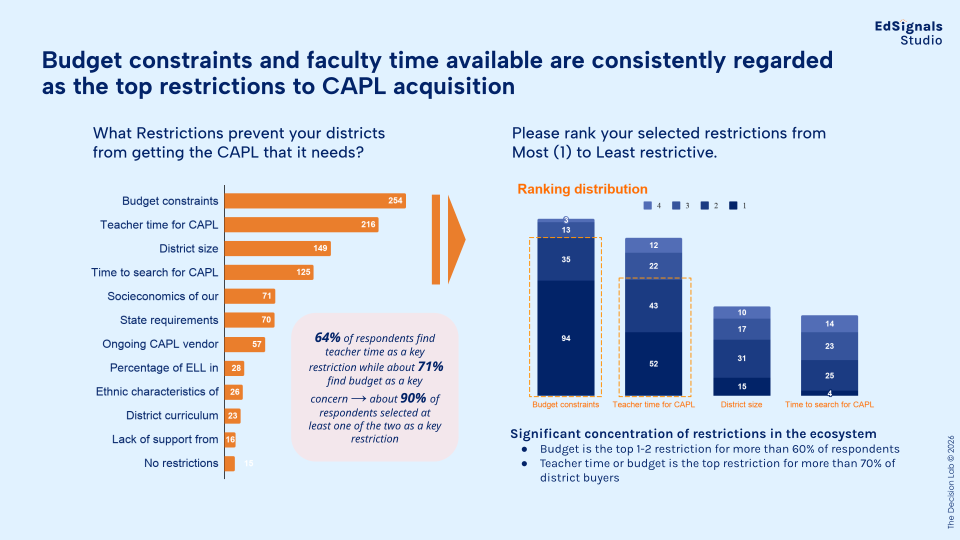
Even when programs perform well in testing, this doesn’t guarantee viability when implemented at full scale within a district’s everyday operational limitations. Budget and time constraints are the most common considerations influencing PL purchasing decisions; an EdSignals Studio survey of district leaders revealed that 71% identified budget as a chief constraint, and 64% identified teacher time as a significant limitation.1 In our research, nearly 90% of respondents selected at least one of these two barriers as a key restriction that prevents them from acquiring the curriculum-based professional learning (CBPL) they need. Issues arise when these constraints force trade-offs between program quality and program feasibility. For example, PL offerings identified as high-quality in testing might turn out to be too expensive or require too much teacher time, forcing districts to settle for offerings that more realistically fit within their limitations. This is also what leads many districts to develop their own PL internally.
There are several ways vendors and quality arbiters can support districts in choosing options that best fit their needs while accommodating logistical limitations. Vendor resources should highlight practical implementation information, including the time required for the PL, the vendor’s implementation strategy, and staffing requirements. This information supports districts in assessing fit from the beginning, before spending valuable time and resources on testing. Furthermore, research shows that in the decision stage, districts prioritize adaptable programs;this means that signals of program flexibility can go a long way toward addressing concerns about budget and time.1 For example, vendors could provide examples of their PL offerings being applied across different contexts, including case studies from districts with varying staff sizes, teacher availability, and budgets.
Finally, vendors should consider districts’ real-world constraints when designing programs. In our work with one PL vendor, we helped the organization determine the most cost-effective and adaptable version of their program. The most desirable option for district leaders wasn’t the cheapest one, but the one that balanced district budget constraints with high-quality, in-demand features like in-person sessions and one-on-one coaching.3
District Leaders Struggle with Decision Fatigue at the Purchase Point
Up until this point, district leaders have navigated several cognitively demanding stages of decision-making, from evaluating potential vendors to interpreting data from PL pilots. As a result, many leaders are struggling with decision fatigue by the time they must commit to a vendor.1 Due to the complexity of the purchase environment—one that includes vendor claims, pedagogical research, reviews from quality arbiters, and data collected from internal tests—district leaders naturally look for practical shortcuts to combat cognitive overwhelm.
In PL purchasing, these decision shortcuts often take the form of familiar vendor options. For example, some district leaders report leaning toward vendors they’ve worked with in the past, identifying these existing relationships as valuable signals of trust.1 While these social trust signals can sometimes help districts identify high-quality options, they alone are not enough to guarantee program fit or impact. Confirmation bias can exacerbate this challenge by encouraging district leaders to favor information that affirms their existing beliefs. For example, they may pay more attention to positive signals about an offering from a familiar PL vendor, while overlooking evidence suggesting that it may not be the best fit.
Evidence-based debiasing strategies are one way to combat mental shortcuts at the final decision point. For example, this is a great opportunity to use a S.W.O.T analysis.3 The questions in this exercise prompt the decision-maker to evaluate the strengths, weaknesses, opportunities, and threats of a given PL option, encouraging a shift in perspective that can help them look critically at their existing beliefs and consider alternative perspectives more objectively.
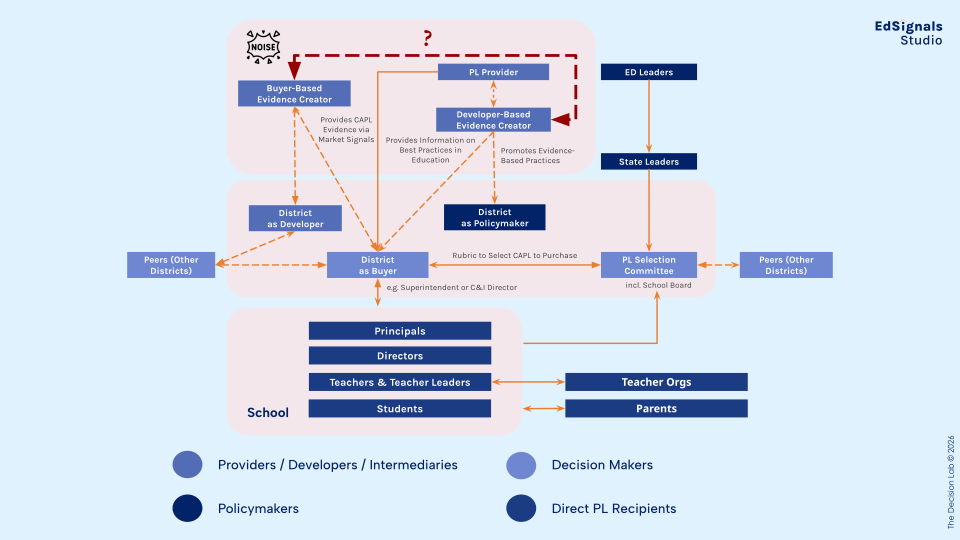
Redirecting the mental shortcuts that steer decision-makers toward familiar options can further increase engagement with more objective evidence of PL quality. One way quality arbiters can do this is by facilitating district-to-district experience sharing. For example, virtual networking events where districts exchange their experiences with CBPL offerings can bring more diverse perspectives into the decision-making process.1 Using trusted peer avenues in this way can break district buyers’ confirmation biases by encouraging them to consider different sources of evidence around PL impact.
Teacher Trust as a Dominant Decision Factor
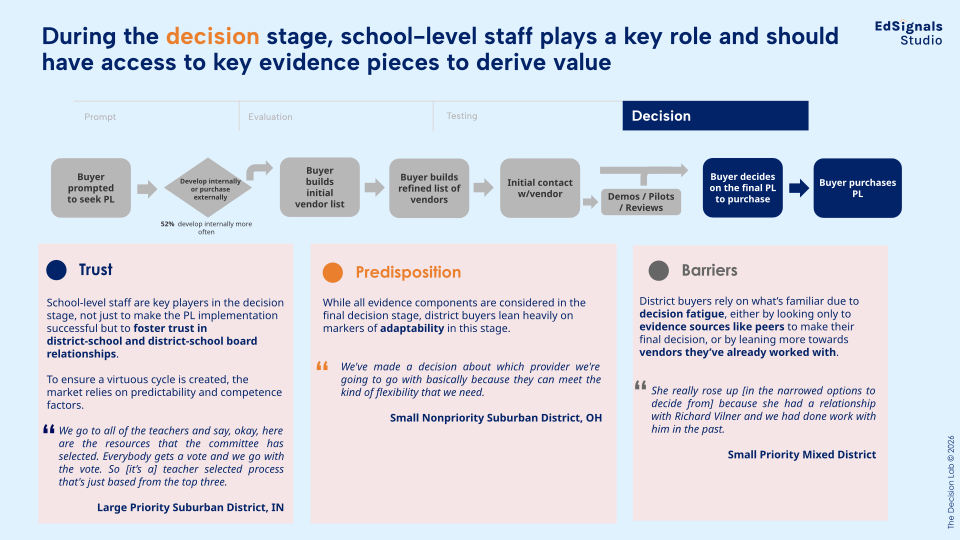
By the time districts reach the end of the CBPL selection process, they often stop looking at external research and instead rely on internal expertise. At this point, districts shift their priorities from high-level content alignment and delivery to concerns about practical classroom realities. In fact, district leaders report that teacher feedback is of the utmost importance at this final decision point.2
Internal expertise is critical as districts face the realities of implementation; involving school staff in the decision stage helps ensure that the PL fits real classroom needs, that teachers understand why it was chosen, and that implementation results in meaningful instructional improvements. Without this buy-in, even high-quality materials can struggle during implementation. As such, district leaders often poll their faculty to ensure there is consensus and trust in the chosen PL provider before moving forward with a final selection.1
Since school staff play a key role in the final purchase decision, evidence of PL quality must speak directly to their needs and preferences.1 For example, educators are often looking for signals of vendor reliability, such as strong references from other districts, positive teacher feedback, and tried-and-true implementation models. It follows that vendors should ensure that these signals are visible to school-level staff, not just district leaders. For example, instead of sharing only district-level success stories, vendors should also highlight teacher testimonials, classroom examples of how the PL has supported instruction, and case studies of how educators have implemented new approaches. Educator-to-educator storytelling is a great way to leverage social proof and build credibility with teachers. Importantly, this messaging should prioritize a pragmatic approach, emphasizing that the PL is user-friendly, accessible to time-pressed teachers, and easily integrated into teacher workflows so teachers can quickly understand its practical value and real-world feasibility.2
Translating Evidence of PL Quality into Better Purchase Decisions
The decision phase is where all of the insights gathered throughout the CBPL purchasing journey have the greatest opportunity to influence instructional outcomes. However, this is also the point when decision-makers are navigating some of the most significant structural constraints, competing stakeholder priorities, and individual cognitive demands. As a result, decisions often default to familiar shortcuts at the final point of commitment, which can mean districts miss out on high-quality PL in favor of familiar options or vendors with existing district relationships.
Strengthening how districts interpret and apply evidence of PL quality requires delivering the right signals at the right time. Vendors should address feasibility concerns early by making cost, time, and implementation requirements clear and by developing adaptable offerings that fit the unique constraints of different districts. They should also present information that’s cognitively accessible and aligns with district leaders’ desire for social proof to reduce cognitive load and support efficient, evidence-based decision making. Finally, vendors and quality arbiters can build teacher trust through educator-facing evidence, ensuring key quality signals are visible to those with significant influence over the final decision. Improving evidence use in the final mile not only strengthens districts’ confidence in their purchase but also ensures that high-quality PL reaches the classrooms where it will have the most impact.
Sources
- EdSignals Studio, Cohort 1, 2025
- EdSignals Studio, Smarter Demand: Dimensions of Quality in Purchasing Decisions, 2023
- EdSignals Studio, Pilot Cohort, 2024