Skip to main content
High-quality curricula can have a significant impact on student outcomes, but strong materials on their own are not enough; teachers need structured opportunities to understand a new curriculum so that materials can achieve full efficacy in classrooms. Curriculum-based professional learning (CBPL) allows educators to dive into new material and understand its intent. However, districts struggle to reliably identify and adopt high-quality CBPL. The market is highly fragmented, with a wide range of providers offering different methods and claims, making it difficult for decision-makers to sift through the noise and find trustworthy information. As a result, districts often execute professional learning internally, which can lead to undue strain on district personnel and compromises in quality.2
To learn more about how districts find and use information about the quality of professional learning programs, the EdSignals Studio partnered with CBPL providers, buyers, and teachers to map the CBPL purchase journey and study the drivers and barriers that influence evidence use at each stage. The first stage, prompt, is the moment when district leaders are driven to seek out external CBPL or develop it internally. Typically, this is catalyzed by a core curriculum purchase, new research on learning strategies, new state standards, teacher turnover, or emerging evidence of unmet classroom needs.
Our research revealed that these early decisions are influenced less by formal research and more by trust, familiarity, and perceived alignment with curriculum and district needs. By identifying the forces that shape how districts navigate internal development and external purchasing decisions, we offer practical strategies to help districts make more informed CBPL choices.
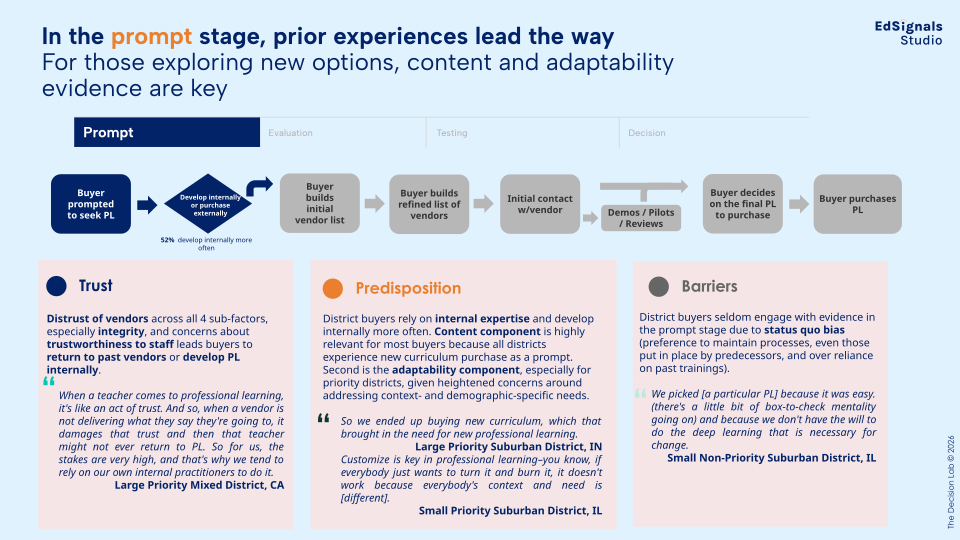
Status Quo Bias Prevents External Exploration
In the prompt stage, districts are tasked with making foundational decisions within a complex market. Research shows that signals of CBPL quality are notoriously difficult to identify and use; 70% of district buyers report that evidence is hard to find, and 47% say it is hard to interpret or apply.2 Time and budget constraints only exacerbate these barriers.
Under these conditions, the safest and easiest option is the one that feels the most familiar. In behavioral science, this is called the status quo bias—a natural preference for the current state of affairs over change. In CBPL purchasing, district decision-makers tend to display a preference for existing processes. For example, they might default to known professional learning solutions over new vendors with promising programs, overlooking stronger evidence in favor of familiarity.2
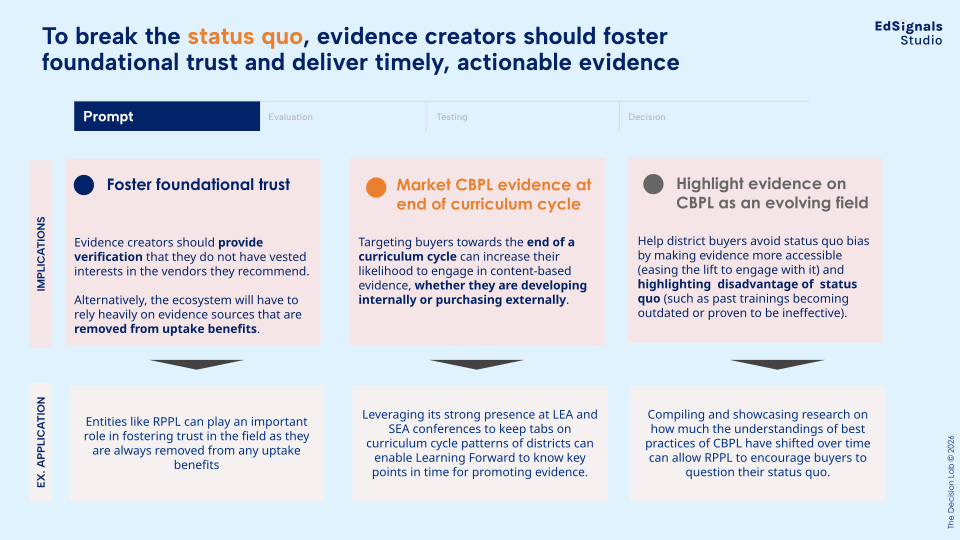
One way to counter the status quo bias in CBPL decisions is to emphasize the risks of maintaining current approaches.2 For vendors and quality arbiters of CBPL, this could mean evidence-based messaging around how past training has become outdated or been proven ineffective in the context of new curriculum materials or state standards. Compiling research that demonstrates how CBPL best practices have evolved can encourage districts to objectively evaluate the costs of change against the costs of maintaining the status quo.
Beyond highlighting the drawbacks of the older methods, education partners can make high-quality information about CBPL easier for districts to use. Tools like the EdSignals Studio Evidence Uptake Framework can help ensure evidence is cognitively easy for district decision-makers to understand and apply. For example, partners should focus on concise summaries and side-by-side comparisons instead of dense academic reports and long papers. When this information is structured in a way that’s easy to consume, decision-makers expend less mental effort exploring new pathways. By clarifying what modern CBPL looks like and presenting options in an accessible format, education partners can encourage districts to rethink their current processes and consider shifting their CBPL strategy.
Limited Trust in Vendors Drives Internal Development
Trust is another significant barrier that can push buyers toward familiar vendors or internal development over unknown but potentially stronger options. In our research, we found that district leaders in the prompt stage are largely focused on vendor integrity and competence.2 They need credible signals that vendors can deliver real value to stakeholders; a single bad experience can push educators away from professional learning in the future, raising the stakes for district leaders in charge of CBPL purchasing. Many districts choose to stick with past vendors, peer recommendations, or internal expertise to limit risk.
To meet buyers where they are, vendors and education partners should focus on establishing credibility before marketing evidence of CBPL quality. Research from the EdSignals Studio found that professional learning leaders tend to discover new resources primarily through trusted social sources, such as presenter-led workshops and informal conversations with peers.3 Traditional marketing, while valuable for visibility, carries less weight at this point in the decision-making process. Trust is often conflated with familiarity, and buyers are more likely to rely on information from known sources when making early CBPL decisions.2 This suggests that the most effective messaging comes through authentic endorsements, respected third-party evaluators, and trusted sources such as professional associations.
Districts Prioritize Alignment and Adaptability of CBPL
In the prompt stage, decision-makers are also concerned with how closely CBPL aligns with their core curriculum and instructional priorities.2 When the purchase of a curriculum triggers new professional learning needs, concerns about alignment often drive districts toward internal development of PL. Internal teams are viewed as best-positioned to translate curriculum changes into training tailored to district-specific needs.
While developing internally might seem like the best way to conserve funds and ensure PL is fully aligned with district priorities, it comes with some hidden tradeoffs. For example, internal development often involves teachers delivering PL to other teachers, under the assumption that strong classroom educators are well-positioned to teach their peers. However, teaching students and facilitating PL require distinct skillsets, and teachers are not automatically equipped with the expertise to deliver high-quality CBPL. Meanwhile, relying on internal teams places significant strain on teachers and district staff, who are already shouldering full workloads.
When districts do choose to purchase external PL, vendors looking to increase engagement can map outreach to curriculum cycles.2 By promoting information about CBPL when districts are in the process of purchasing new curricula, vendors can position themselves as implementation partners. This could mean highlighting how offerings support specific components of the new curriculum or demonstrating how training sessions create opportunities for teachers to get comfortable with the new material.
Information about adaptability is equally as important as evidence of curriculum alignment. Decision-makers want to know how CBPL can be tailored to their district’s specific context, and they’re looking for signals that an offering can be adjusted to fit different classroom challenges, demographic needs, and budget constraints. Without clear evidence of adaptability, even high-quality content can appear misaligned with district priorities and may be dismissed early in the decision process.
One way vendors can demonstrate adaptability is through case studies of similar districts, specifically showing how CBPL was successfully tailored to instructional priorities or student demographics. Vendors can further reinforce adaptability signals through regionally contextualized messaging, especially at conferences where buyers are seeking locally relevant options.3 For example, being prepared to discuss the unique needs of a district can help buyers understand how external options might work in their context. Similarly, vendors can suggest different implementation pathways tied to district capacity, demonstrating how CBPL can be flexible without sacrificing quality.
Strengthening Early Decisions in the CBPL Journey
In the complex CBPL ecosystem, strong evidence of fit and quality is often difficult for districts to find and apply. Cognitive barriers compound this issue, further complicating decisions between internal development and external purchasing. In this early stage, status quo bias leads districts toward familiar processes, while limited trust in vendors can push buyers toward reliance on peer recommendations or in-house solutions. Concerns about curriculum alignment and adaptability can also encourage districts to default to internal teams, even if external options may offer greater expertise. These various barriers help explain why high-quality CBPL often struggles to gain traction.
Strengthening early-stage decisions requires reducing the friction involved in changing existing processes, building trust among vendors and education partners, and delivering clear signs of curriculum alignment and flexibility at the moment districts are prompted to seek CBPL. When signals of trust and quality are highly visible, leaders are better positioned to move beyond familiar defaults and make deliberate, evidence-based decisions.
Sources
- Foster, E. (October, 2024). Curriculum-based professional learning benefits students and teachers. Learning Forward. https://learningforward.org/journal/curriculum-based-professional-learning/curriculum-based-professional-learning-benefits-students-and-teachers/
- EdSignals Studio, Cohort 1, 2025
- EdSignals Studio. (2025). 2025 Annual Report. https://edsignals.org/edsignals-studio-2025-annual-report/