 Skip to main content
As districts wrap up EdTech pilots and move toward final product selection, internal and external pressures can intensify. The final purchase stage in EdTech procurement is shaped by several familiar barriers: budget constraints, tight timelines, decision fatigue, and urgency-driven cognitive biases. Additional hurdles emerge as districts roll out products in classrooms and seek buy-in from teachers and school leaders. At a pivotal decision point, these barriers can shift attention away from evidence of product quality and toward options that feel easier to implement within existing constraints.
Challenges that surface during purchase are often rooted in earlier issues, including limited teacher input during evaluations and unstructured feedback collection processes during pilots. However, even rigorous procurement journeys do not guarantee strong final decisions. Decision-making frictions, such as cognitive overload and groupthink, can shift how evidence is used at this key point of commitment. At the same time, the practical challenges of introducing new products to teachers and scaling them across classrooms can weaken the reach and impact of high-quality tools.
Based on research from the EdSignals Studio, we have uncovered key insights about how evidence is used during product purchasing and what factors lead to strong product implementations.1 From educators and district decision-makers to vendors and third-party education partners, there are clear opportunities to reduce friction at the purchase stage and ensure products are positioned to succeed.
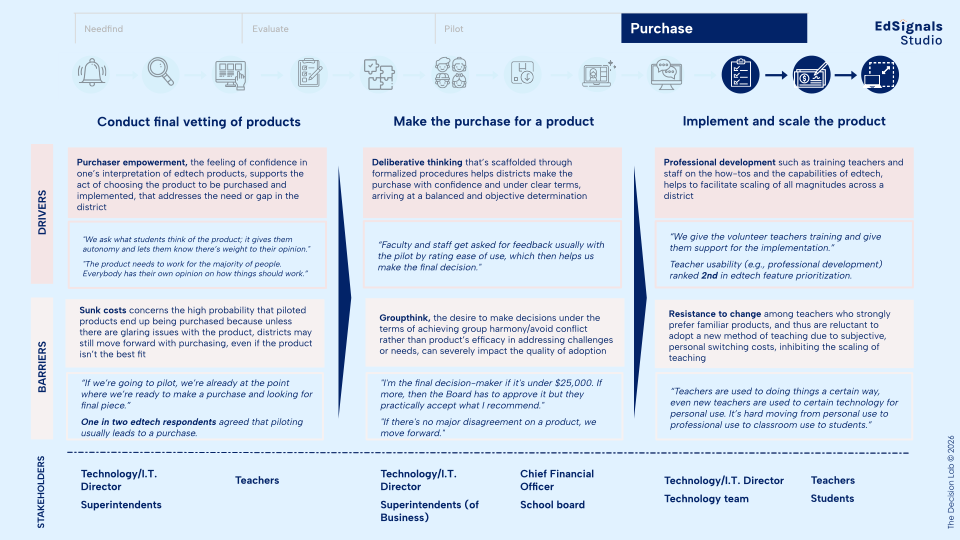
Cognitive Overload at the Final Decision Point
By the time districts reach the final purchase stage in the EdTech procurement process, they have already dedicated significant cognitive resources to adoption. District leaders have spent time meeting with vendors, talking to teachers, reviewing data, running pilots, and collecting feedback, among many other mentally demanding tasks. This is the point at which decision fatigue sets in.
Research shows that cognitive fatigue can reduce the stability of our decision-making strategies and even alter how we perceive risk.2 As a result, those tasked with making final EdTech purchase decisions can be drawn to familiar options in favor of simplicity.3 This might mean defaulting to vendors with an established market presence, leaning too heavily on the recommendations of peer districts, or moving forward with options that have produced “good enough” results in pilots. Compounding this challenge, cost constraints at the point of purchase can force districts to make trade-offs or favor lower-cost options, especially if budgets shift during purchasing timelines.
Mitigating cognitive fatigue during the purchase stage requires planning for the final decision from day one. For example, establishing clear goals back in the needfind stage—when districts are just beginning to recognize a learning gap or a need for new tools—can help districts stick to their original priorities as they reach the end of the purchase journey. Creating a pre-commitment decision rubric streamlines each decision while keeping stakeholders focused on what matters most to their specific district. This means establishing what success looks like in the classroom well before looking for products.
Vendors play an important role in this process as well. By simplifying decision environments throughout the adoption journey, they can make high-quality options easier for districts to choose. For example, by pursuing recognizable quality certifications and working with districts to proactively address implementation concerns, cybersecurity risks, or budgeting limitations, EdTech vendors can help districts make stronger decisions throughout the purchase process, setting them up for success in the last mile.
Groupthink and the Push to Reach a Final Decision
In an ideal world, districts would have the time to engage a diverse range of stakeholders before making a final decision about what to purchase. However, external factors—such as budget cycles or implementation timelines—often force decisions to advance without the luxury of closely exploring every point of view. When groups are pushed to make a decision quickly, committees may prioritize agreement over careful deliberation, creating conditions where groupthink can emerge.1 Groupthink occurs when decision-makers are motivated by a desire for consensus and group harmony, prompting individual members to withhold their dissenting opinions. As a result, adoption decisions often move forward when there is no visible disagreement, even if individuals still hold unvoiced objections.1
Deliberative thinking is crucial for arriving at a final decision objectively, but it’s often constrained by time pressures or cognitive fatigue. Formal processes can ensure careful decision-making remains a priority at the end of the adoption journey, especially in group settings that can be vulnerable to bias.1 One way to bake deliberation into the purchase decision is to appoint a devil’s advocate. This is someone who deliberately argues the case for a different choice, helping the group discover potential weaknesses and consider alternative information that might not surface during harmonious discussions.4 Another option is to have the group conduct a pre-mortem analysis—an exercise that prompts the decision-maker to envision their decision failing and consider potential causes, such as assumptions or biases that may have led the decision-maker in the wrong direction.4
Exercises like these can ensure every EdTech option is considered as objectively as possible. They also create a decision-making environment in which dissenting voices get a chance to surface before a final commitment is made, increasing the visibility of diverse stakeholder perspectives during final vetting.

Securing Teacher Engagement for an Effective Rollout
When districts move to implement and scale purchased products, stakeholder buy-in is essential for success. However, teacher adoption isn’t guaranteed, especially when EdTech tools are chosen and introduced without their input.1 Furthermore, teachers are frequently expected to juggle multiple EdTech products simultaneously, often without proper training or support with implementation. The clear solution is to involve educator voices in every part of the process, from the early stages of identifying student needs and evaluating products to piloting the top picks in classrooms. That said, there is more that districts can do to improve buy-in during the final stretch.
Staff and teacher training is crucial for building confidence among end-users and ensuring classrooms are set up to extract maximum value from new products. Importantly, compensating educators for their time spent learning new tools often increases meaningful participation. One district in Georgia successfully incentivized engagement by paying teachers a stipend for every course they completed on a new EdTech assessment tool over the summer. As a result, the district saw over 100 teachers certified in the platform by the time the school year began.5 Not only that, these teachers became a trusted source of information and assistance for other educators learning their way around the new tool.
Common issues with implementation reveal opportunities for the supply side as well. Districts often prioritize vendors that will support the implementation process, manage rollout, and build confidence among end-users. In fact, some are willing to walk away from a product if the vendor cannot deliver the teacher support that they require.5 Even if one vendor offers stronger evidence of product quality, district decision-makers may prioritize a competitor that provides more reliable implementation support.
Vendors should be prepared to reassure districts with clear implementation plans—such as localized teacher onboarding books—and evidence of implementation success, including data on teacher usability.5 Vendors can also seek certifications in interoperability that signal their readiness for seamless technical integration and strong data privacy compliance. At the final stage of selection, these signals help reduce perceived implementation risk and strengthen district confidence that teachers will receive the support they need.
Strengthening Evidence Use at the Final Point of Purchase
The final stage of EdTech purchasing is often the point at which time pressures, budget constraints, cognitive fatigue, and challenging group dynamics reach their peak. At such a high-stakes moment, objective evidence can have a difficult time surviving these barriers and informing the final adoption decision. Decision-makers who have spent months evaluating vendors and collecting pilot data may find themselves defaulting to familiar options, striving for consensus over careful deliberation, or prioritizing vendor delivery support over product quality.
There are opportunities for actors on both sides of the EdTech supply chain to strengthen evidence use at the final decision point. Districts that define success early, create space for dissent in group discussions, and invest in educator training are more likely to make high-quality purchase decisions. At the same time, vendors that simplify choice environments with clear quality signals and proactively support implementation can ensure evidence remains top of mind among district decision-makers. Together, they can ensure evidence-driven EdTech decisions translate into meaningful classroom impact.
Sources
- EdSignals Studio, Smarter Demand: Dimensions of Quality in Purchasing Decisions, 2022
- Mullette-Gillman, O. A., Leong, R. L., & Kurnianingsih, Y. A. (2015). Cognitive Fatigue Destabilizes Economic Decision-Making Preferences and Strategies. PloS one, 10(7), e0132022. https://doi.org/10.1371/journal.pone.0132022
- EdSignals Studio, Cohort 1, 2025
- EdSignals Studio, Pilot Cohort, 2024
- Boykin, M. (October 31, 2025). Treating Teachers as Tech Leaders: How Districts Can Rebuild Trust After a Transition. EdTech Digest. https://www.edtechdigest.com/2025/10/31/treating-teachers-as-tech-leaders-how-districts-can-rebuild-trust-after-a-transition/


