While 86% of districts consult evidence when selecting curriculum, far fewer maintain the same rigor during testing and implementation.1 In fact, only 60% of districts pilot materials before adoption. Even then, many struggle with structural and behavioral barriers that weaken the reliability of their results.
In the pilot phase of curriculum adoption, districts review sample materials, recruit teachers to conduct classroom pilots, and gather feedback about how well each option meets student and teacher needs. Strong pilots support smooth implementation down the line. Yet, like earlier stages of the adoption process, the pilot phase comes with its own set of challenges, especially for districts lacking the time and teacher availability to thoroughly vet new material. As a result, decision-makers may unintentionally favor options that seem easier or more familiar, or proceed with a piloted curriculum despite known problems simply to justify the time and resources already spent.
Through work with district leaders, curriculum purchasers, and other education stakeholders, the EdSignals Studio has traced these piloting challenges back to a few key barriers: hesitation about unfamiliar materials, limited teacher time, and inconsistencies around implementation and evidence collection. By applying insights from behavioral science, we introduce evidence-based interventions that help districts run more meaningful pilots, make better decisions, and ultimately adopt materials that improve student learning.
Risk Aversion Limits What Districts Choose to Pilot
Before pilots start, districts face a common challenge: deciding what materials to test in classrooms. Districts are sometimes reluctant to pilot unfamiliar curriculum materials, even if those materials could outperform familiar options.2 When districts need quick solutions to curriculum gaps, familiarity becomes a practical shortcut. Those with strong reviews, reputational signals, and an existing market presence are always going to feel like a surer bet, especially when piloting is so resource-intensive. Teachers, too, are naturally disinclined to spend their limited bandwidth testing products without a proven track record.2 To limit risk, decision-makers may also gravitate toward products that “check all the boxes” on required criteria, such as those with culturally sensitive content, even if they underperform on other quality dimensions.2 These barriers can prevent emerging high-quality curricula from getting a real chance in the classroom.
How can districts ensure high-quality instruction materials (HQIM) make it onto pilot shortlists? One potential solution is to normalize the use of third-party reviews, which can legitimize unfamiliar options and reduce the perceived risks associated with materials from unknown vendors.3 Offering districts and teachers low-stakes exposure to the curriculum—in the form of sample lessons, demos, and teacher-ready assessment tools—can also help build familiarity with new material before pilots launch.
Districts can further counter the draw of familiarity by intentionally including at least one non-familiar, high-quality option on pilot shortlists.3 This simple act of choice architecture subtly shifts the decision-making environment so that non-familiar materials feel more like default options rather than alternatives to the “norm.”
Heavy Teacher Workloads Make Pilot Participation Challenging
Once districts have assembled materials to pilot, finding teachers to test these materials is not a given. District leaders’ biggest challenge with piloting materials is a shortage of time and human capital.2 Teachers busy with lesson planning, grading, and classroom management can’t always sit down and test new products, and asking them to work overtime to try new tools should be avoided. This isn’t just a problem for small, resource-limited districts; 30% of districts agree that recruiting teachers for piloting is a key issue.4
When teachers don’t have the time or cognitive bandwidth to participate in pilots, it removes the diverse voices districts rely on most when making decisions about curriculum choice. A lack of teacher participation also limits the amount of real, contextualized evidence districts can gather before making an adoption decision. Pilots are the only opportunity for districts to understand how materials influence the classroom environment, fit with teacher workflows, and support student learning in practice. They also give teachers a chance to voice concerns about the new curriculum and share meaningful feedback on usability. This allows districts to identify potential challenges before full-scale adoption and anticipate the kinds of support teachers might need to implement the curriculum effectively.
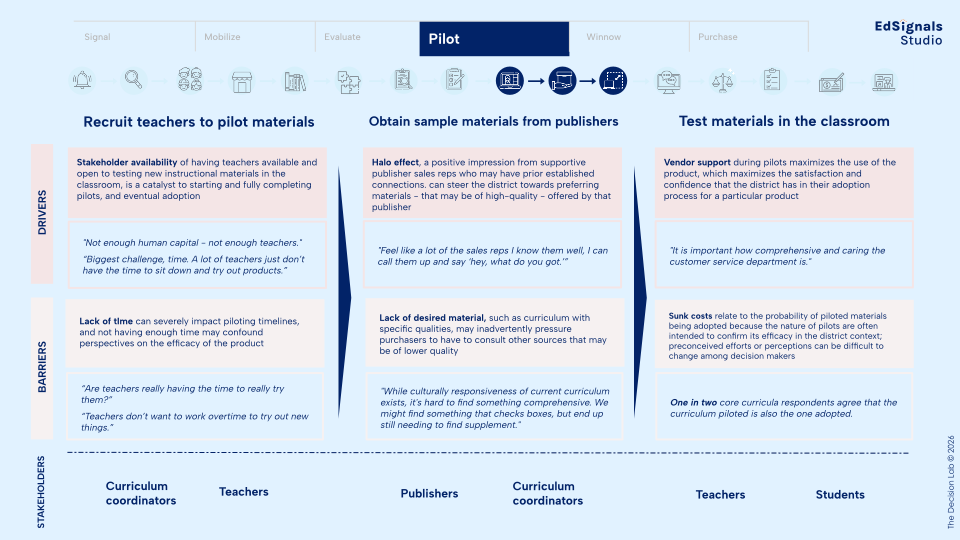
To encourage teacher participation in pilots, the process must be as frictionless as possible. This concept is the foundation of many influential behavior change frameworks, including the widely used EAST framework (make the desired behavior Easy, Attractive, Social, and Timely).5 Involving teachers early in the adoption process is a great way to reduce the friction associated with curriculum piloting. By consulting teachers and considering their workflow, districts can schedule pilots when they will cause the least amount of disruption.
Teachers Need Clear Tools and Training to Pilot Effectively
On top of time limitations, teachers often enter pilots without clear expectations about their role or what to look for when testing new materials in the classroom. Without clear processes, pilots layer new cognitive demands onto an already complicated job, making teachers feel overwhelmed and disconnected from the purpose of the pilot.
When teachers don’t feel a sense of ownership over piloted curricula, they’re more likely to resist new materials or question the relevance of the chosen program, limiting the impact of HQIM on student outcomes.1 While professional development training and feedback following classroom observation support teachers’ use of HQIM, many teachers receive little training devoted to the curriculum.7 As a result, teachers still spend a significant portion of their time searching for materials online and creating their own instructional content, even when districts choose high-quality curricula.7
Importantly, this challenge often starts before the pilot phase. When teachers are left out of earlier stages of curriculum adoption, they can feel disconnected from the materials chosen for piloting. Bringing teachers’ voices into earlier processes—specifically during steps like goal-setting, criteria development, and material evaluation—gives teachers a better understanding of the chosen curriculum, the rationale behind its selection, and how it should be tested in the classroom.
Increasing teachers’ sense of ownership over curriculum material, and ensuring they know how to use it, are critical for extracting valuable evidence from pilots and supporting strong implementation in later stages of the journey. This is where vendor support can have a meaningful impact; research shows that guidance from vendors during piloting helps optimize the use of new materials.2 It can also increase teacher satisfaction and confidence in their role.
Consistent Evaluation Processes Lead to Stronger Pilot Evidence
Districts also face challenges in collecting and interpreting data from pilots. While 72% of district leaders feel confident identifying and adopting HQIM, only 59% have established processes to assess the efficacy of a curriculum during implementation.1 It goes without saying that unclear criteria for testing materials in the classroom can make it difficult to determine what is and isn’t working.
When teachers lack structured tools to generate consistent evidence, data on pilots varies widely across classrooms. For example, unstructured feedback might take the form of anecdotal reports, which can prioritize memorable classroom experiences rather than evidence of student learning outcomes. Just as district leaders can be drawn to familiar options, teachers may rate familiar materials more positively and judge new material more harshly. Confirmation bias can also shape evaluation decisions; for example, many teachers worry that their students won’t be able to handle rigorous new curriculum material.7 When teachers expect students to struggle with HQIM, they may unintentionally focus on signs of difficulty, even if the material is driving real learning improvements.
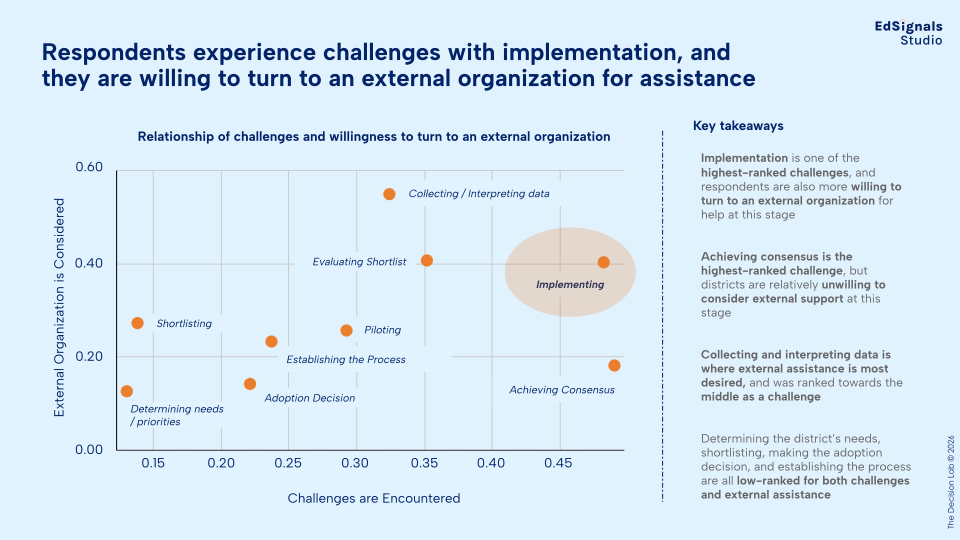
Research shows that districts are very willing to work with external organizations to help collect data during curriculum piloting, supporting more consistent and comparable pilot results.3 Education partners and curriculum vendors can support this process by providing frictionless tools for classroom evaluations, so teachers know how to best provide valuable feedback. Likert scales, checkboxes, and short answer fields ensure districts can collect both qualitative and quantitative data without burdening busy teachers with lengthy feedback forms. By creating simple, standardized testing tools, districts can reduce ambiguity in data collection and ensure pilots result in consistent, meaningful evidence for later curriculum decision-making.
Another best practice is to establish adoption goals from day one. Starting with a deep understanding of district needs, a detailed set of priorities, and clear metrics can prevent districts from improvising criteria when it comes time to pilot.1 This can also help build trust in pilot results, as decision-makers can point to a clear chain of evidence that’s rooted in the district’s initial goals and supported by predefined metrics.
Unlocking the Full Value of Curriculum Pilots
Piloting new curriculum materials isn’t easy. Whether due to lack of time, limited staff availability, or challenges with comprehensive classroom testing, many districts skip this step entirely. However, pilots are the only real opportunity to see how curriculum materials perform in classrooms before committing to full adoption. Strong pilots also support stakeholder buy-in before teachers are expected to implement new materials. Securing this buy-in early ensures the final phase of adoption goes smoothly while maximizing the impact of high-quality curricula on student outcomes. Collecting meaningful data from pilots also gives districts a chance to anticipate potential challenges associated with the new curriculum, so they can troubleshoot ahead of time and plan for a smooth rollout during full adoption.
Fortunately, a lot can be done to strengthen the results of classroom pilots. By including unfamiliar HQIM in adoption shortlists, making piloting easier and more attractive for teachers, and providing standardized processes for pilot implementation and assessment, districts can unlock more meaningful pilot results. These interventions can set teachers and students up for success by helping districts avoid introducing bias at this critical stage of the adoption journey and ensure decisions are rooted in real-world evidence of impact.
Sources
- EdReports, The Decision Lab. (September 16, 2025). Beyond Selection: Rethinking How Districts Adopt Curriculum. https://www.edreports.org/resources/article/beyond-selection
- EdSignals Studio, Smarter Demand: Dimensions of Quality in Purchasing Decisions, 2022
- EdSignals Studio, Pilot Cohort, 2024
- EdSignals Studio, Market Analysis: K-12 Teacher Prep Decision Maps, 2020
- Behavioral Insights Team. (2024, December 16). EAST Framework: Four Simple Ways to Apply Behavioural Insights. BIT. https://www.bi.team/publications/east-four-simple-ways-to-apply-behavioural-insights/
- Cowan, J., & Goldhaber, D. (2018). Do bonuses affect teacher staffing and student achievement in high poverty schools? Evidence from an incentive for national board certified teachers in Washington State. Economics of Education Review, 65, 138-152. https://doi.org/10.1016/j.econedurev.2018.06.010
- Steiner, D. (2024). The Unrealized Promise of High Quality Instructional Materials. State Education Standard, 24(1). https://www.nasbe.org/the-unrealized-promise-of-high-quality-instructional-materials/