Skip to main content
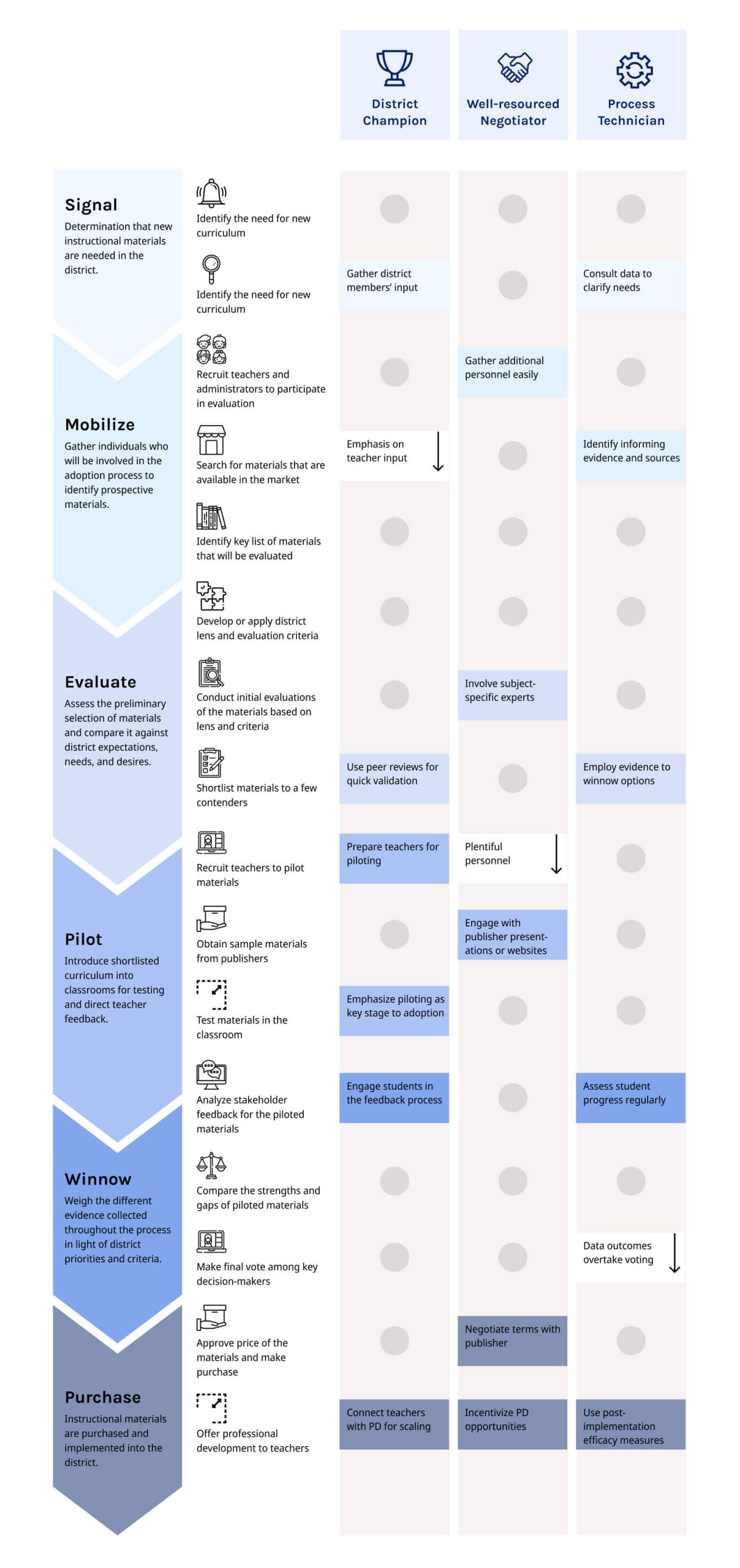
Core curriculum purchasing is a six-stage journey that varies widely across districts. We identified three market segments (Champions, Negotiators, and Technicians) and analyzed their buyer profiles to understand how each group navigates the complex path from early signals to final adoption.
Three Core Curriculum Segments Demonstrated Predictability

District Champions value and use student and teacher voices to identify district-specific needs. The piloting stage is critical to garnering this feedback. In-house data is a key piece of final adoption decisions, as well as initial scoping.
However, the focus on district data may result in Champions missing other structured criteria to inform their evaluative lens and feedback interpretation.

Well-resourced Negotiators wield a high degree of market power, allowing them to get to what they need and negotiate prices with little friction.
Notably, Negotiators may face more challenges with balancing the weighting of resources, in addition to group-relevant biases.

Process Technicians are confident in their ability to identify evidence sources and are interested in capturing the efficacy of adoptions upon implementation. Technicians try to stay in touch with their end users from procurement through to implementation.
However, their experience may spur overconfidence and potential resistance to new sources.

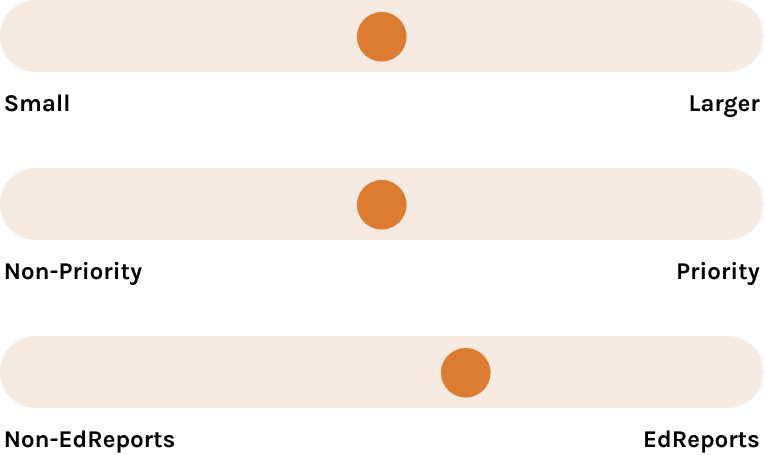
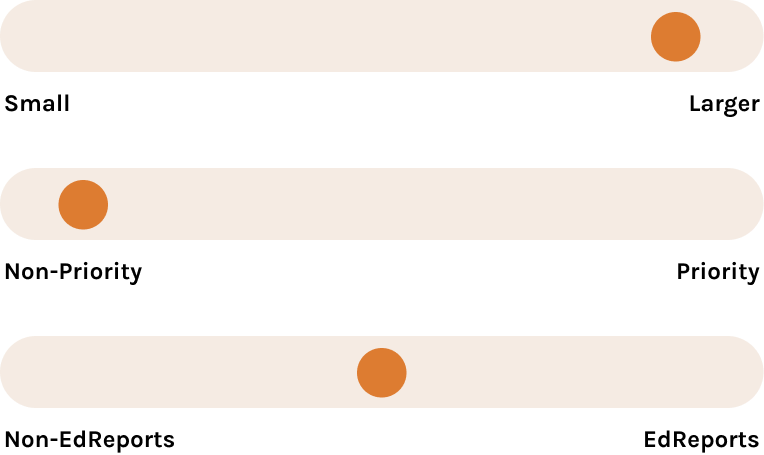
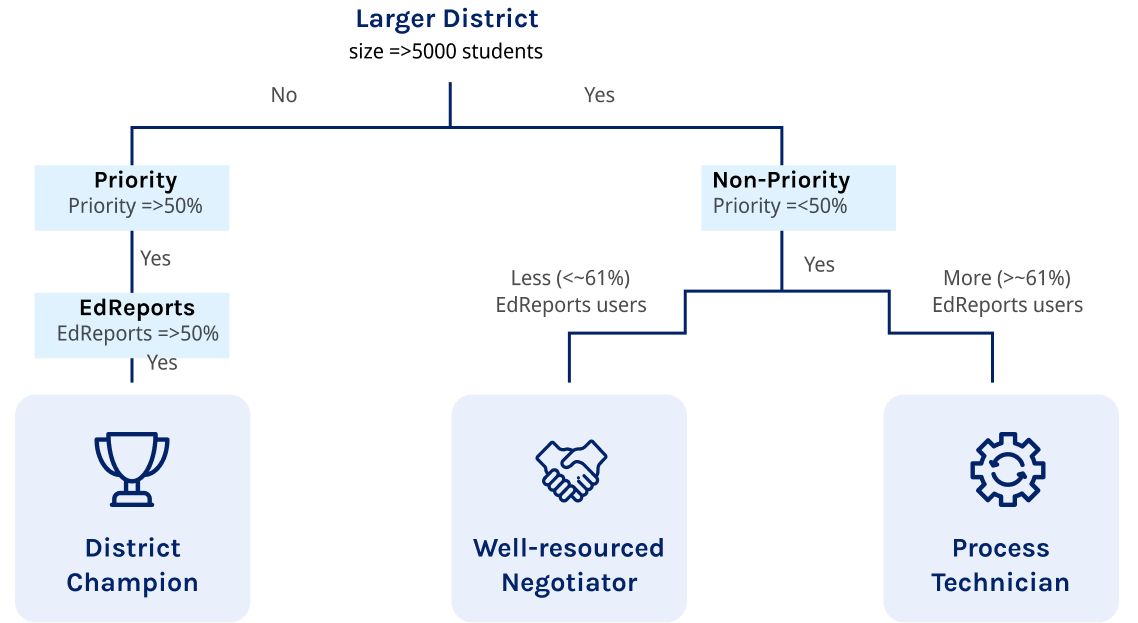
The curriculum segments can be identified based on relative differences in district size, priority classification, and EdReports use.
Segments revealed unique preferences for evidence sources
Preferred Sources of Evidence
- User feedback from focus groups and surveys
- Conferences and forums
Why is the Source Preferred?
- Feedback from users provides the most contextually relevant data
Greatest Barriers to Evidence Use
- Lack of structured or objective evaluative lens
Preferred Sources of Evidence
- Vendor websites
Why is the Source Preferred?
- Websites are the simplest and fastest route of accessing information about products and prices
Greatest Barriers to Evidence Use
- Balancing the weighting of multiple sources
Preferred Sources of Evidence
- District-standardized rubrics
- Online rubrics and instructional material reviews
Why is the Source Preferred?
- Rubrics and reviews provide objective criteria from a trustworthy, unbiased source
Greatest Barriers to Evidence Use
- Overconfidence and potential resistance to new sources
The Procurement Journey for Core Curriculum Purchasing
Highlights the similarities across the three segments and involves six stages: signal, mobilize, evaluate, pilot, winnow, and purchase.