One of the highest-friction points in curriculum adoption occurs after districts have decided what to buy. The purchase phase of curriculum adoption is the final stage in the lengthy and complex process, during which district leaders purchase the chosen materials and implement them in classrooms across the district. Easier said than done, this stage tasks time-pressed leaders with several complex responsibilities: negotiating terms with publishers, connecting teachers with professional development opportunities, and establishing post-implementation efficacy measures to ensure the curriculum delivers on its promised student learning outcomes.
Research shows that nearly half of all districts struggle during this implementation process1. While districts might be clear on what they want after evaluating, piloting, and winnowing down their options, fragmented roles involved in buying and launching the chosen curriculum can shift priorities at the last second. Actors in instruction, procurement, legal, and finance bring numerous new voices into these final decisions, often delaying adoption or narrowing the scope of implementation. Meanwhile, districts are often constrained by rigid timelines, tight budgets, and weak stakeholder engagement that can further reduce the impact of high-quality instructional materials (HQIM).
Drawing on research from the supply and demand sides of curriculum purchasing, the EdSignals Studio has uncovered several strategies to address barriers that surface during this final adoption phase. These insights underscore the importance of needs alignment, internal capacity-building, and stakeholder engagement to help districts follow through on evidence-based decisions, even under the immense pressure of committing to a final purchase. Let’s explore some of the most significant challenges facing districts in the final stretch of adoption and some key interventions that can lead to better outcomes.
Misalignment Between Instructional Goals and Purchasing Limitations
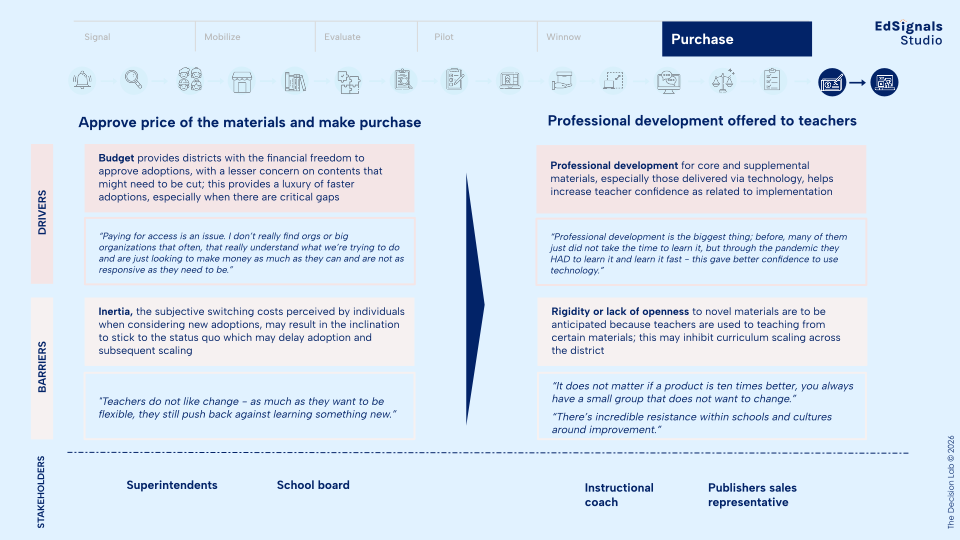
One of the most significant barriers stalling the journey from curriculum selection to purchase involves aligning instructional priorities with fiscal needs. During the purchase phase, budget availability is a key driver that supports smooth and scalable adoption.2 Flexible budgets allow for faster approvals and reduce internal resistance, enabling districts to move efficiently from pilot review to adoption and quickly close critical student learning gaps. Unfortunately, many districts are working with rigid budgets that constrain final purchase decisions and delay full-scale implementation.
More than stalling action, misalignments between the instructional needs of teachers and the fiscal priorities of curriculum purchasers can turn the purchase decision into a moment of compromise. This is where districts might drop supplemental components in favor of budget alignment or reduce professional development for teachers to fit adoption within strict timelines. If a budget changes during the adoption process, districts often have to replace chosen materials.2 Smaller districts are especially vulnerable to the implementation barriers associated with tight budgets. For example, even when districts can identify HQIM, many small and under-resourced districts lack the capacity to purchase it or provide sustained coaching to ensure effective long-term use by teachers.1 These smaller districts can also have a hard time negotiating favorable contract terms with vendors without dedicated curriculum teams or experts to help handle the complex purchasing process.1
To manage budget constraints at the point of purchase, districts should focus on shifting budget alignment and instructional priorities upstream in the adoption process. Getting clear on budget limitations and implementation needs before searching for materials can help surface necessary trade-offs early, allowing districts to work around these when selecting and piloting materials. This also gives districts the opportunity to clarify which components of the curriculum are essential for successful implementation versus which can be adjusted to accommodate budget or funding source requirements. Even better, districts can plan for ongoing success with detailed adoption roadmaps that include multi-year implementation support, aligning instructional goals with budgeting realities long-term.1 Frontloading all of this planning can help reduce decision fatigue at the final purchase stage, lowering the chance that last-minute pressures push districts toward delays or compromises.
Difficulty Achieving Stakeholder Buy-In at Curriculum Implementation
Once a curriculum is purchased, getting teachers on board with the new materials is the last step before districts can achieve full-scale adoption. Unfortunately, gaining stakeholder buy-in is a challenge for nearly half of all districts.1 This often stems from teacher voices being excluded from earlier decisions, leaving them unexpectedly responsible for implementing new materials they had little to no say in selecting. At the time of implementation, educators have to abandon familiar learning materials and instructional practices, disrupting routines that teachers feel work best for their students, even if new materials carry the promise of better learning outcomes.2 When teachers are involved in early adoption discussions, many still don’t receive sufficient training on new curricula. Teachers are often expected to learn new materials in real time during active instruction, with limited opportunities to prepare in advance.
The result is that many teachers continue creating their own curricula instead of teaching new materials by the book. A recent Rand report shows that nearly 50% of teachers report using supplemental curriculum materials they created themselves.3 Most teachers still mix and match materials when teaching their classes, and nearly all report modifying their curriculum materials rather than teaching them as intended. While this is not inherently negative—teachers have the best understanding of their students’ needs and capabilities—the inconsistent use of a new, high-quality curriculum can reduce its beneficial impact on students. This pattern is a signal that teachers could use clearer guidance or stronger support when implementing curricula in the classroom.
Teachers are less likely to substantially modify the curriculum when school and district supports are in place, underscoring the importance of strong professional development opportunities.3 Besides ensuring these supports are available, districts can strengthen stakeholder buy-in during implementation by involving teachers and instructional leaders in adoption discussions from the outset. Early communication gaps often lead to later problems with full-scale implementation, even if districts feel that they’re doing everything right when choosing and evaluating material.4 Research shows that only 22% of teachers feel like they have a role in selecting instructional materials.3 Those whose voices are left out of curriculum decisions are more likely to feel disconnected from the new curriculum and less likely to use it effectively.
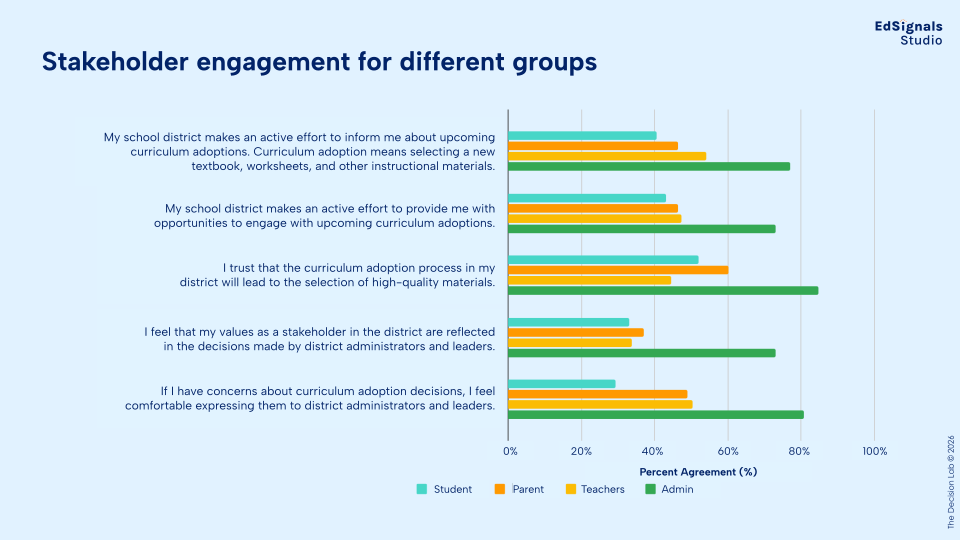
Building adoption journeys on a strong foundation of teacher involvement is crucial for achieving long-term buy-in. This involves placing teachers on adoption committees, establishing structured processes to elicit feedback through every stage of adoption, and engaging students and families to achieve a broader perspective on community needs from the very beginning.
Early and frequent communication can further help stakeholders understand the rationale behind curriculum choices, reducing pushback later. With this in mind, school principals play a crucial role in communicating district decisions, establishing norms for curriculum use, and connecting teachers with opportunities to deepen their understanding of adopted materials.3 Overall, our research into curriculum adoption suggests that open communication and strong professional development opportunities are key to increasing teacher confidence and uptake of HQIM.2
Supporting Smooth Implementation with Early Supports
Adoption decisions are strongest when districts anticipate downstream challenges early and establish processes that support follow-through at the final decision point, when leaders will be facing the most pressure. Strict budgets and insufficient professional development opportunities are common and predictable constraints that only intensify at the end of the adoption journey. These challenges are further amplified by well-documented capacity limitations within smaller districts. When these barriers only emerge late in the process, they can undermine otherwise strong curriculum purchasing decisions. By planning for implementation as early as possible, building internal capacity to manage complex purchasing processes, and supporting teachers through change, districts can optimize the use of new materials, ensuring they work to close learning gaps and improve student outcomes for years to come.
Sources
- EdReports, The Decision Lab. (September 16, 2025). Beyond Selection: Rethinking How Districts Adopt Curriculum. https://www.edreports.org/resources/article/beyond-selection
- EdSignals Studio, Smarter Demand: Dimensions of Quality in Purchasing Decisions, 2022
- Doan, S., Woo, A., Shapiro, A., Bellows, L., Kassan, E. B. (2025, July 15). Teachers’ Use of Instructional Materials from 2019–2024: Trends from the American Instructional Resources Survey. Rand. https://www.rand.org/pubs/research_reports/RRA134-30.html
- EdReports. (2025, September 24). 4 Steps to Get More From Curriculum Adoption. https://edreports.org/resources/article/4-steps-curriculum-adoption