With thousands of EdTech products on the market, district leaders face an incredibly complex landscape when deciding which tools to purchase. They must sift through a multitude of confusing signals—from vendors, marketing materials, conferences, peers, informal conversations, and academic literature—about what they might need and why. When driven by learning science and data on student outcomes, the downstream outcomes of these decisions can have a transformative impact on classrooms. On the other hand, decisions shaped by incomplete information can overwhelm students and teachers with tools that are ineffective, counterproductive, or go unused altogether.
To better understand the factors that drive EdTech purchasing, the EdSignals Studio interviewed 259 procurement leaders from districts across the United States. The goal was to examine the decision-making processes that influence how districts select high-quality products, but also to identify opportunities to improve market signals and help educational leaders make more evidence-based decisions for their classrooms. A previously underdeveloped area of research, the Studio used these findings to map key touchpoints in the EdTech purchasing process, surfacing common barriers to evidence use and opportunities to improve the choice environment at each pivotal decision point.
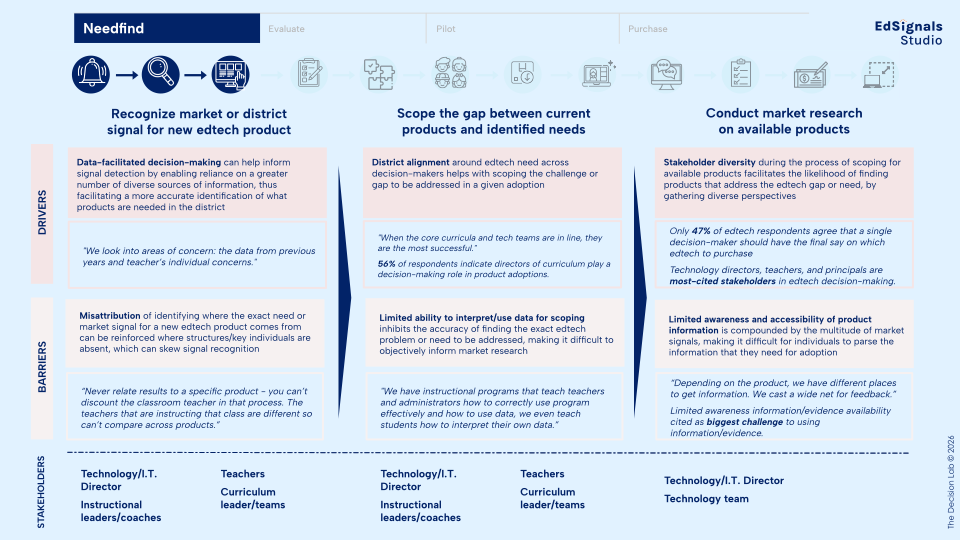
We refer to the first stage of this journey as needfind. This is when districts recognize a signal or cue that prompts the search for new tech, scope the gap between existing products and unmet needs, and begin conducting market research to identify available products. During this phase, districts can face difficulty accurately recognizing market signals, clearly interpreting district needs, and determining what products are actually out there. Throughout this article, we’ll take a close look at these challenges and explore potential solutions to ensure the needfind stage establishes a strong foundation for evidence-based EdTech decisions.
Understanding What Triggers the Search for New EdTech
Signals that push districts to explore new EdTech tools originate from many sources, including vendor demos, trend reports, peer adoptions, student data, and changes in policy or funding. While a balanced mix of signals is necessary for providing a reliable picture of need, this complex landscape can also cause districts to misidentify why they think they need a new EdTech product.1 For instance, a flashy vendor pitch can prompt districts to pursue a product that promises to improve math scores, even if the product doesn’t have evidence to back up its claims.
These kinds of eye-catching signals can become disproportionately weighted over less accessible internal data, which might contradict the need for new products or point to another solution entirely. As a result, districts often adopt promising EdTech products and later have to figure out how to make the most of them.3
This signal misattribution is more likely among small districts without formal processes to identify needs, such as dedicated EdTech review teams or established routines for reviewing existing product usage.1 It can also happen when teacher voices are left out of the discussion; many teachers feel that districts are out of touch with their biggest tech needs.2 When needs are defined by district admins or IT leaders rather than teachers, classroom needs receive less attention or may be perceived in ways that prioritize system-level priorities like administrative efficiency. Districts might interpret low student engagement as a district-wide need for new tech products, even if the problem could be more simply solved with a non-digital classroom solution, such as more time for group discussions and hands-on activities.
A focus on data-driven decision-making can help districts pinpoint true areas of concern within the district instead of focusing on the most visible signals for a new EdTech product.1 The more diverse the information sources, the better. This means looking at product use and outcome data from previous years, talking to teachers, and examining what challenges are emerging in classrooms. These insights can help districts differentiate between perceived demand and genuine need before committing to new tools.
Clarifying the Gap Between Classroom Needs and Existing Tools
Even when districts can identify a specific need for EdTech, it’s difficult to assess the gap between classroom needs and existing tools. Districts may gravitate toward new products as a way to address learning gaps, especially when there are so many tools available—the average number of tech products that districts use regularly has nearly tripled over the last several years.4 However, as a district’s tech stack grows, it becomes increasingly difficult to offer consistent professional development to teachers, manage student screen time, and support the effective use of individual tools. Moreover, research suggests that about 67% of educational software product licenses go unused, representing a significant investment that doesn’t always benefit classrooms.5
When districts add new tools without first examining how existing products are being used, they risk layering new solutions on top of unresolved challenges. What looks like a gap between classroom needs and existing tools might actually be a gap in professional training or instructional priorities.
Again, the crux of this issue is data interpretation. When districts don’t have clear guidelines on how to use and interpret data about existing tools, it can be difficult to identify what kinds of tools are needed—or if a gap exists at all. At the same time, districts often assess gaps based on how well existing tools align with curriculum content or internal infrastructure, which can make it harder to address equity gaps that also have a significant influence on student outcomes.6 For instance, districts risk adopting tools that do not fully address existing issues when they fail to consider whether all teachers and students can access those tools outside of school.
Beyond building a data culture within districts, aligning EdTech needs across various decision-makers can help close gaps in understanding and paint a more comprehensive picture of need before districts begin searching for available solutions. For example, interviews with EdTech purchasers suggest that adoption outcomes are more likely to be successful when core curriculum and tech teams are aligned on their goals and priorities from the beginning.1 Incorporating diverse perspectives when scoping gaps can help districts define problems more clearly, reduce unnecessary purchases, and ensure better outcomes from tools already purchased and in use.
Navigating Product Information and Evidence in a Crowded Market
When it comes time for districts to tackle market research and hunt down available products, many face difficulty navigating product information. Districts might not be aware of or not know how to access external evidence that can help inform their product search. Academic literature, for example, is notoriously difficult to access and translate into actionable insights.
As a result, it becomes easy to favor product reviews or vendor-provided materials over rigorous evidence. 54% of EdTech purchasers say they find academic literature difficult to access, while only 14% feel the same way about product reviews.1 When signals of quality are hard to access, products that are already popular or easier to find can crowd out newer products from smaller companies that may be more effective, shaping decisions even before districts start comparing and evaluating products.
This challenge is even more pronounced in smaller districts with limited staff capacity for scoping options. Solo EdTech advocates or small teams of time-pressed stakeholders are less likely to have the bandwidth to consult external data than larger, dedicated procurement departments or formal committees.1 Smaller districts often have a hard time justifying a long research process altogether, especially when tech products might become obsolete within a few years.6
These challenges highlight an opportunity for intermediaries to make high-quality evidence more available to districts, especially early in their purchase journey. Districts need product information and clear signals of quality that’s accessible outside of long-winded academic papers and jargon-heavy market reports. Third-party certifications and seals from organizations like the International Society for Technology in Education (ISTE), Digital Promise, and Common Sense Media can serve as credible and easily interpretable early signals for district leaders looking for products that meet recognized quality standards.
Clear and simple communication—available where district leaders are already looking for information on EdTech products, like conferences—can help further widen the field of options considered during these early touchpoints. To help EdTech producers, vendors, and third-party evaluators make information more available and accessible to district leaders, the EdSignals studio has assembled this comprehensive toolkit based on exhaustive research into the district buying journey. This is an excellent place to start for organizations looking to connect districts with clearer signals of product quality early in the EdTech purchase process.
Making Evidence the Backbone of Early EdTech Decision-Making
Evidence lies at the heart of strong EdTech procurement. Early in the purchase process, evidence helps districts clarify what challenges they’re trying to solve and why new tools are the answer. Student learning data can prompt districts to start searching, existing EdTech usage patterns can reveal gaps that would benefit from new products, and rigorous evidence can act as a signal of quality that helps districts research their available options. As district leaders navigate the overwhelming EdTech market, evidence helps counter the pull of visible signals and identify which products are truly likely to work for their unique needs.
Strengthening EdTech decision-making requires a collaborative approach across both supply- and demand-side actors. Districts, third-party evidence creators, and vendors can each play a role. With clear evidence, diverse perspectives, and decisions grounded in data, districts are better positioned to choose high-quality products for their classrooms.
Sources
- EdSignals Studio, Smarter Demand: Dimensions of Quality in Purchasing Decisions, 2022
- Boryga, A. (January 31, 2025). Teachers Want Hard Questions Asked Before Adding Tech. Edutopia. https://www.edutopia.org/article/teachers-want-hard-questions-asked-before-adding-tech/
- Feller, D. (April 26, 2019). Districts Often Out of Touch with Teachers’ Biggest Tech Needs, Survey Finds. EducationWeek. https://www.edweek.org/technology/districts-often-out-of-touch-with-teachers-biggest-tech-needs-survey-finds/2019/04
- Klein, A. (August 26, 2022). The Number of Ed-Tech Tools School Districts Use Has Almost Tripled. That’s a Problem. EducationWeek. https://www.edweek.org/technology/the-number-of-ed-tech-tools-school-districts-use-has-almost-tripled-thats-a-problem/2022/08
- Glimpse K12. (May 19, 2019). Glimpse K12 Analysis of School Spending Shows that Two-Thirds of Software License Purchases Go Unused. https://www.glimpsek12.com/blog-posts/glimpse-k12-analysis-of-school-spending-shows-that-two-thirds-of-software-license-purchases-go-unused
- Pusey, S. (July 12, 2019). For Better EdTech Purchasing, Ask These 4 Crucial Questions. EdScoop. https://edscoop.com/edtech-purchasing-procurement-k12-tips/